
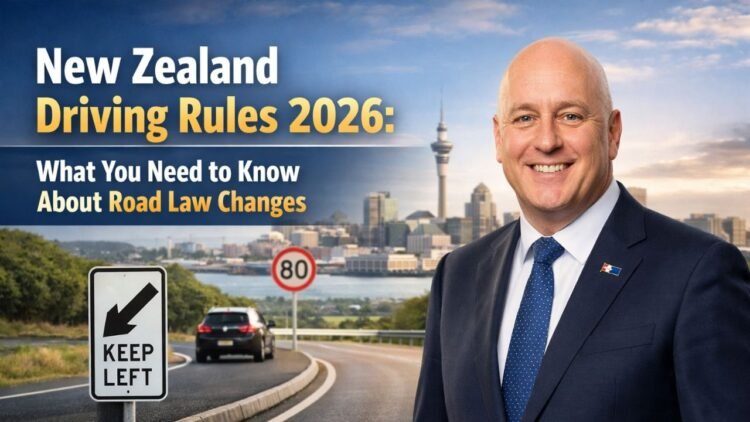
In 2026, New Zealand’s driving rules are undergoing one of the biggest changes in recent years. The government has introduced reforms aimed at modernising the driver licensing system, improving road safety, and reducing costs for drivers.
These updates affect learner drivers, young drivers, and anyone moving from a restricted licence to a full licence. With these changes, New Zealand is saying goodbye to some old rules and creating a more streamlined system for the future.
Key Changes in New Zealand Road Rules
The main reforms focus on the Graduated Driver Licensing System (GDLS). Here’s a breakdown of the major updates:
| Aspect | Old Rule | New Rule (From 2027) |
|---|---|---|
| Full Licence Test | Required for restricted drivers to get full licence | Removed; drivers progress based on experience and safe driving behaviour |
| Learner Licence Period | 6 months for all ages | 12 months for under 25s; can reduce to 6 months with logged practice hours |
| Restricted Licence Duration | 6 months standard | 12 months for under 25s; 6 months for over 25s |
| Alcohol Limit | Zero only for some new drivers | Zero-alcohol limit for all learner and restricted drivers |
| Eyesight Screening | Required at multiple stages | Only at first application and licence renewal |
| Licence Costs | Standard fees apply | Estimated $80 reduction for a Class 1 (car) licence |
| Hazard Perception Test | Part of full licence test | Now included in the restricted licence test |
| Training Provider Oversight | Standard rules | NZTA gains power to monitor and suspend training providers |
Why These Changes Matter
The 2026 reforms aim to make driving more accessible, affordable, and safe. Removing the full practical test reduces unnecessary costs while keeping focus on safe driving habits.
Extending the learner period for younger drivers ensures they gain more real-world experience before driving independently. The zero-alcohol rule for all learners and restricted drivers increases road safety by eliminating risk from alcohol consumption.
Officials believe these changes will streamline the licence system, improve consistency in driver education, and encourage safe driving from the very beginning. At the same time, longer supervised periods for younger drivers and stricter oversight of training providers are designed to reduce accidents among new drivers.
What Drivers Should Know
Although the rules were announced in 2026, drivers must continue following the old requirements until 25 January 2027.
Current learners and restricted drivers should plan ahead and understand the new licence process, including the extended learner periods, zero-alcohol requirements, and the removal of the full practical test. Preparing early ensures a smooth transition and compliance with the updated regulations.
The 2026 changes to New Zealand’s driving rules mark a significant shift in how drivers progress from learners to fully licensed motorists.
With the removal of the full practical test, longer learning stages for young drivers, reduced licence costs, and stricter alcohol rules, the reforms are designed to balance safety, affordability, and modernisation. Drivers must stay informed and prepare for the new system to ensure a smooth and safe driving experience in 2027 and beyond.
FAQs
When will the new road rules take effect?
The changes will officially take effect on 25 January 2027.
Is the full practical test still required for a full licence?
No. The second practical test for Class 1 (car) licences has been removed.
Does the zero-alcohol rule apply to all learners and restricted drivers?
Yes. All learners and restricted drivers must have a zero-alcohol level while driving.